Maryland offers excellent opportunities for wild mushroom foraging thanks to its diverse landscapes, ranging from the Appalachian Mountains in the west to the Chesapeake Bay region and Atlantic Coastal Plain. The state's hardwood forests, river valleys, and moist woodland habitats support a wide variety of edible mushrooms, including morels, chanterelles, lion's mane, oyster mushrooms, and hen of the woods.
Edible Mushrooms in Greece: Guide to Identification, Habitat, and Safe Foraging

Marcus Bennett
Cat Specialist
Updated
June 24, 2026
3 views 5 min read
Table of Contents6
- Understanding proper identification, seasonal patterns, and habitat preferences is essential for safe and successful mushroom hunting throughout Maryland.
- What Are the Most Popular Edible Mushrooms in Greece?
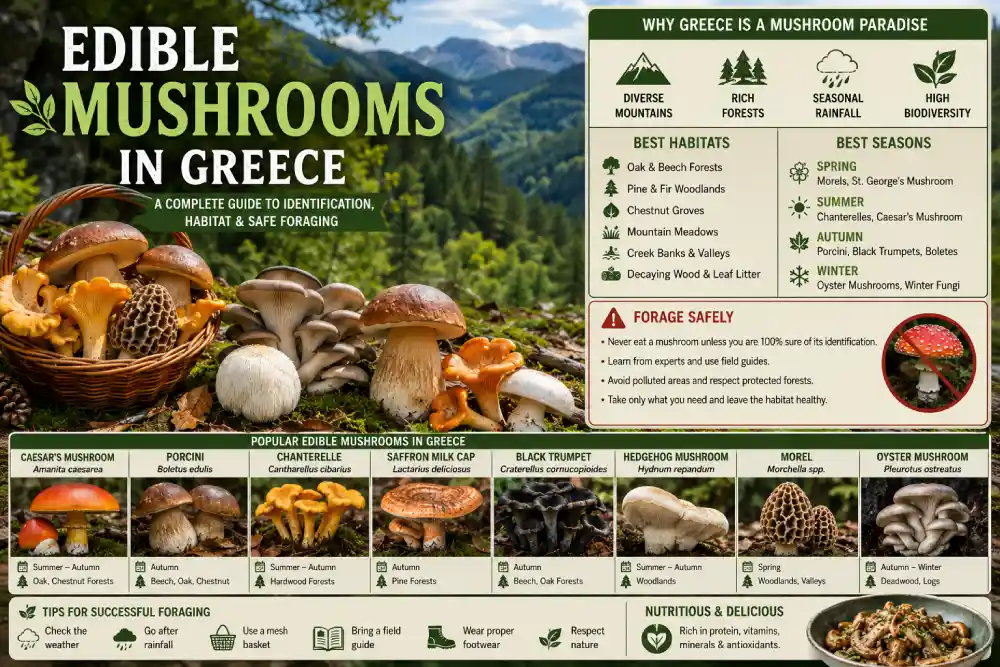
- MushroomSeasonHabitatEdibilityCaesar's MushroomSummer–AutumnOak forestsExcellentPorciniAutumnBeech, oak, chestnut forestsExcellentChanterelleSummer–AutumnHardwood forestsExcellentSaffron Milk CapAutumnPine forestsExcellentBlack TrumpetAutumnBeech and oak forestsExcellentMorelSpringRiver valleys and woodlandsExcellent
- Why Greece Is One of Europe's Best Mushroom Destinations?
- The Importance of the Pindus Mountains
- Forest Biodiversity
Understanding proper identification, seasonal patterns, and habitat preferences is essential for safe and successful mushroom hunting throughout Maryland.
What Are the Most Popular Edible Mushrooms in Greece?
Greece's diverse landscapes support hundreds of mushroom species, many of which have been collected and eaten for generations in mountain villages and rural communities.
The most sought-after edible mushrooms are prized not only for their flavor but also for their cultural importance in traditional Greek cuisine.
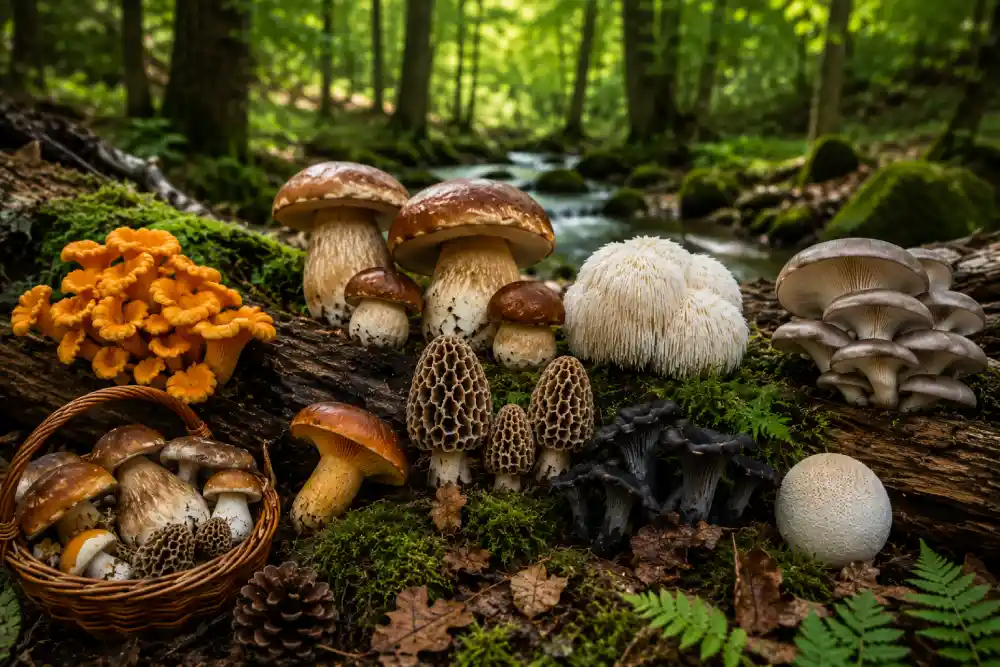
Most Common Edible Mushrooms Found in Greece

Some of the best-known edible species include:
- Caesar's Mushroom (Amanita caesarea)
- Porcini (Boletus edulis)
- Summer Bolete (Boletus reticulatus)
- Chanterelle (Cantharellus cibarius)
- Saffron Milk Cap (Lactarius deliciosus)
- Black Trumpet (Craterellus cornucopioides)
- Hedgehog Mushroom (Hydnum repandum)
- Oyster Mushroom (Pleurotus ostreatus)
- Morels (Morchella spp.)
- Parasol Mushroom (Macrolepiota procera)
- St. George's Mushroom (Calocybe gambosa)
Many of these mushrooms are sold in local markets throughout northern Greece during autumn and are featured in regional dishes, soups, pies, and stews.
Why Greece Is One of Europe's Best Mushroom Destinations?
While countries such as Italy, France, and Spain often receive attention for mushroom foraging, Greece possesses many of the same ecological advantages.
Its combination of Mediterranean climates, mountain ecosystems, and extensive forests creates ideal conditions for fungal biodiversity.
Diverse Climate Zones
Greece contains several distinct climatic regions.
These include:
- Mediterranean coastal climates
- Mountain climates
- Alpine environments
- Humid northern forests
- Dry southern landscapes
Because elevation changes dramatically across the country, mushrooms can fruit over a much longer period than in many other European nations.
The Importance of the Pindus Mountains
The Pindus Mountains are often considered the heart of Greek mushroom country.
These mountains provide:
- High annual rainfall
- Extensive hardwood forests
- Rich organic soils
- Cool summer temperatures
- Long autumn growing seasons
Many prized edible species reach peak abundance in these forests.
Forest Biodiversity
Greek forests contain a mixture of:
- Oak woodlands
- Beech forests
- Chestnut groves
- Fir forests
- Pine forests
Want to identify your own cat?
Upload a photo and get an instant AI breed report — free to try.
Scan Your Cat